美国恐怖故事
5 killed, 17 injured in rain shelter collapse as torrential rainfall batters SW China’s Sichuan, leading to relocation of 21,784_我的网站

一 |
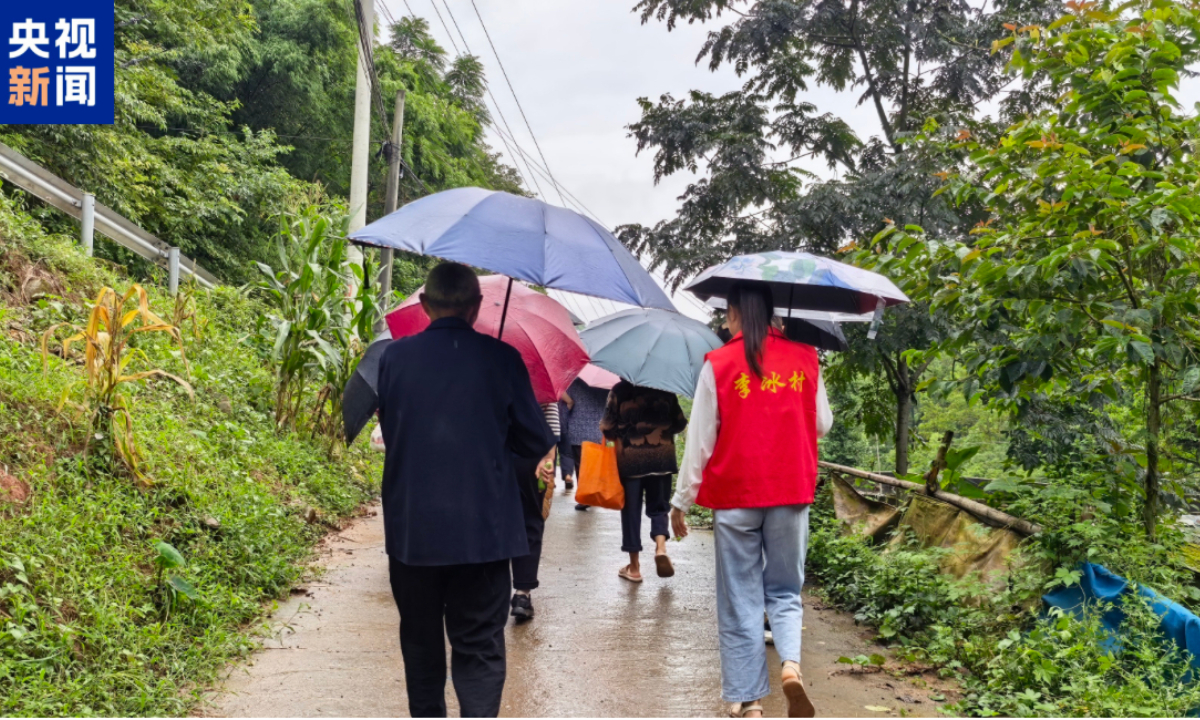
In Changning county, Southwest China’s Sichuan Province, a temporary rain shelter collapsed during a banquet at a villager’s home on Tuesday evening, killing five people and injuring 17 others, Xinhua News Agency reported on Wednesday.
According to the Changning county emergency management bureau, the accident occurred at around 5:30 pm on Tuesday during a banquet held to celebrate the admission of the villager’s child to college. The parapet wall on the roof of the first floor, which was used to secure the shelter, collapsed after water accumulated on the structure and excessive tension was placed on the ropes.
The accident killed three people at the scene, while two others later died after emergency treatment failed. Another 17 injured people are currently receiving treatment in hospital. Local authorities are making every effort to treat the injured and handle the aftermath of the incident.
The accident occurred amid torrential rains battering parts of Sichuan, leading to relocation of 21,784 people in advance as of Wednesday morning. The rainfall also triggered two geological disasters, state broadcaster China Central Television (CCTV) reported.
According to the office of the geological disaster prevention and control command of Sichuan Province, heavy to torrential rain hit areas such as Chengdu and Zigong in Sichuan, with some areas experiencing extreme heavy rain. The maximum precipitation recorded at Shulin village, Dongpo district, and Meishan city reached 118 millimeters.
The heavy rainfall triggered two geological disasters. One occurred in Jiulong county, Garze Tibetan Autonomous Prefecture, where the affected road has been restored to traffic. The other occurred in Wenchuan county, Aba Tibetan and Qiang Autonomous Prefecture, causing a disruption on G350 national highway. Local transportation authorities have implemented traffic control measures and are continuing repair efforts.
As of 7 am on Wednesday, a total of 21,784 people had been relocated to safety in advance over the previous 24 hours across 64 counties-level regions in 13 cities and prefectures in Sichuan. Among them, the largest numbers were recorded in Liangshan (7,346 people), Mianyang (3,174 people), and Ya’an (2,400 people). Since the start of the flood season, Sichuan has carried out advance evacuations for a total of 1,102,694 people.
Global Times
。 Dhaka, Oct 9 (UNI) Teesta is one of the 54 rivers that enter Bangladesh from India. After originating from Solamo Lake in India, it flows over Sikkim and West Bengal and enters Bangladesh through Rangpur region.
Later it joins the Brahmaputra river near Chilmari in Kurigram district. For many years there has been a demand for a Teesta agreement on the sharing of Teesta water. But the agreement is stuck due to India's delay and various excuses. Because of this, the people of the northern part of Rangpur Bangladesh are now dreaming about the Teesta Master Plan.
The Teesta Agreement was to be signed during the then Prime Minister of India Manmohan Singh's visit to Dhaka in 2011. But it stalled in the face of opposition from West Bengal Chief Minister Mamata Banerjee. Then in 2015 Indian Prime Minister Narendra Modi visited Bangladesh with Mamata Banerjee. There he assured that a compromise would be reached on Teesta water sharing. But the Teesta problem has not been solved.
During the last Bangladesh Prime Minister Sheikh Hasina's visit to India, there was a possibility of reaching a settlement on Teesta water distribution, but it did not happen.
In addition to the construction of various infrastructure related to Teesta coast management, flood control dams and various types of infrastructure will be built to eliminate water shortage during summer. Since Bangladesh has a long-standing dispute with India over Teesta water sharing, arrangements will be made to retain water during the dry season. Among the issues that have dominated the project so far, three are important—dredging the riverbed, revetment or embankment repair and embankment, and land reclamation. Apart from this, there are also plans to repair flood dams.
If this project named 'Teesta a River Comprehensive Management and Restoration' is implemented, a 220 km high guide dam, river drive, hotel-motel-restaurant, modern city and tourist center will be developed along both the right and left banks of the Teesta river. Along with that, 150 MW solar power plant, industrial plant, EPZ will be built.
Apart from this, several lakh hectares of agricultural land will be saved and afforested. Under this project, the main stream of Teesta will be two kilometers, which will maintain navigability throughout the year. It will be connected by several canals, which will benefit crores of people of Teestapar. It is said that the two banks of the Teesta will be modernized on the model of China's Huang Ho River and Suqian City through the master plan. There will be Marine Drive on both sides of the embankment. Modern irrigation projects and agricultural farms with machinery will be built. At the same time satellite cities will be built on both banks of the river.
The two banks of the Teesta will be developed on the model of Suqian City in East China's Jiangsu Province. For this, approximately 9 thousand crore taka can be spent. The project is named Teesta River Comprehensive Management and Restoration'. Since then, days go by, months go by, years go by and years come. However, the much-desired great plan has not started.
Chinese Ambassador Li Jiming visited the Teesta Barrage on Sunday, October 9.
At this time, he listened to the hopes and aspirations of the people of the area. A large number of local people, civil society and administration people were present.
It is noted that, Rangpur is the poorest division of Bangladesh. And five of the country's poorest and most impoverished districts are located across the ravaged Teesta. Pagla river famous Teesta Lalmonirhat, Nilphamari, Rangpur, Kurigram and Gaibandha districts is the name of the misery of millions of people. The flow of the 234-year-old Teesta is causing floods and droughts every year in these five districts. People's sighs are getting heavier because of this, the life cycles of both sides are constantly changing.
UNI BAV SHK1835。
Current article:http://vobt3.tichannangenzhuchuapin.cfd/vxme5/fve9.html
Published on:20:55:24